✅ 助動詞の否定文まとめ
🔵 基本ルール
👉 形はとても簡単!
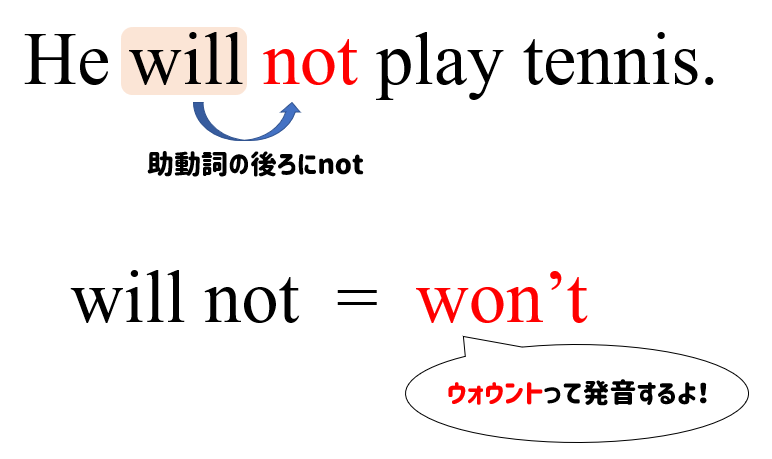
主語 + 助動詞 + not + 動詞の原形
⭐ ポイント
✔ 動詞は必ず「原形」
✔ 助動詞のあとに not を置くだけ
🔵 よく使う助動詞の否定
① can → cannot / can’t(〜できない)
・I can’t swim.
(私は泳げません。)
・She can’t drive.
(彼女は運転できません。)
・We cannot enter this room.
(私たちはこの部屋に入れません。)
② will → will not / won’t(〜しないだろう)
・I won’t go tomorrow.
(私は明日行かないでしょう。)
・He won’t help me.
(彼は私を助けないでしょう。)
・They will not join us.
(彼らは参加しないでしょう。)
③ must → must not / mustn’t(〜してはいけない)
・You mustn’t run here.
(ここで走ってはいけません。)
・Students must not use phones.
(生徒は携帯を使ってはいけません。)
④ should → should not / shouldn’t(〜すべきでない)
・You shouldn’t eat too much.
(食べすぎるべきではありません。)
・He shouldn’t be late.
(彼は遅れるべきではありません。)
⑤ may → may not(〜かもしれない/許可されない)
・She may not come.
(彼女は来ないかもしれません。)
・You may not park here.
(ここに駐車してはいけません。)
※ mayn’t はほとんど使いません。
🌟 超重要ポイント
✅ 助動詞のあとに not
✅ 動詞は必ず原形
✅ 主語が he / she / it でも形は変わらない!
例:
He can swim.
He can’t swim.
(doesn’t のように変化しない!)
❌ よくある間違い
❌ He can’t swims.
⭕ He can’t swim.
❌ She will not goes.
⭕ She will not go.
🎯 まとめ
助動詞の否定はとてもシンプル。
・can → can’t
・will → won’t
・must → mustn’t
・should → shouldn’t
・may → may not
👉 「助動詞 + not + 原形」